
Daniel Yang
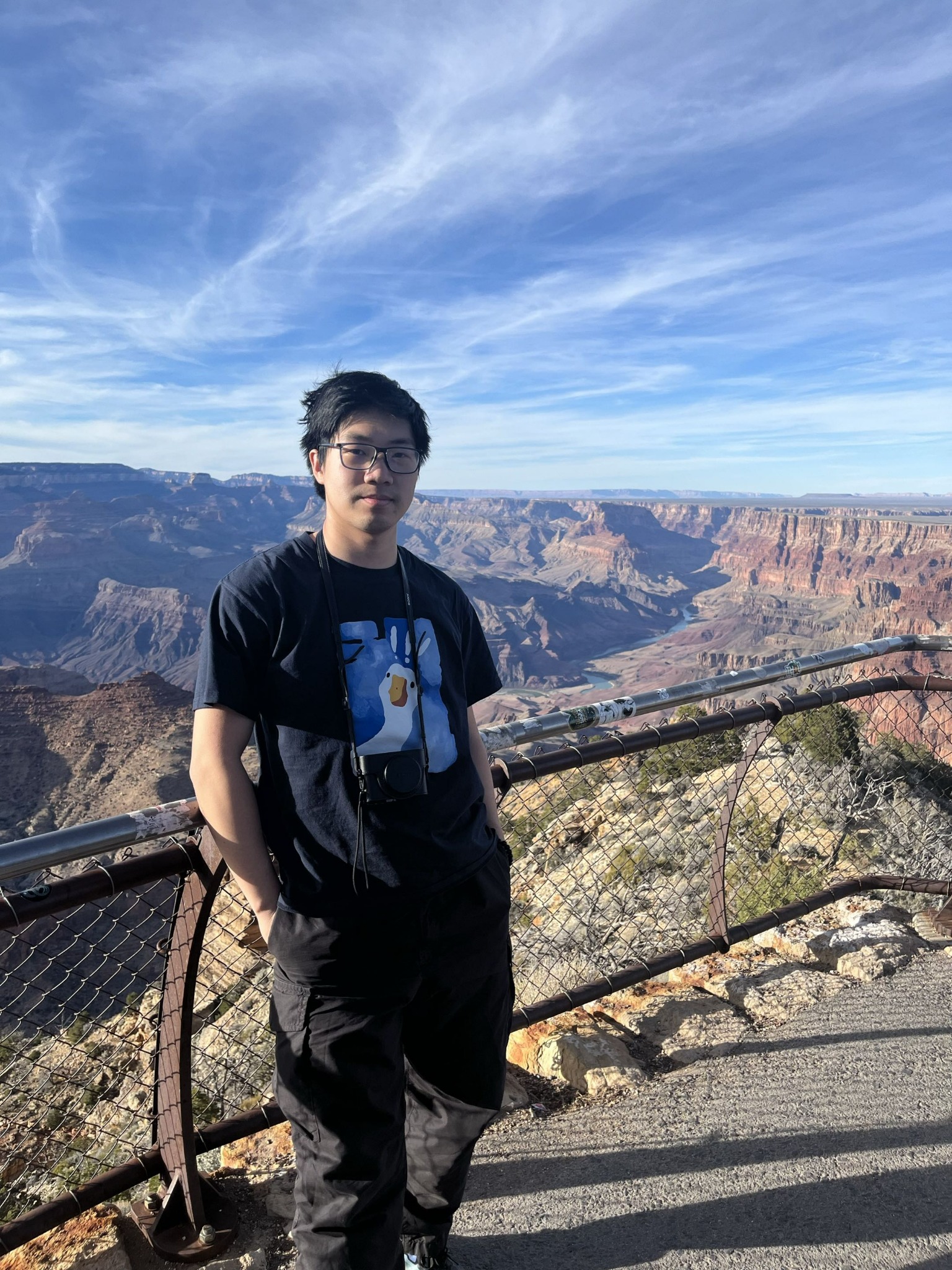
Daniel represented Canada at GeCAA 2020 and at IOAA in 2021 and 2022, earning a gold medal at both IOAA appearances. After studying computer science at Princeton, he now works in software engineering.
“It was all pretty incredible and just hooked me into continuing with astro.”
Results
- GeCAA 2020: bronze medal.
- IOAA 2021: gold medal, as Canada placed first in the team competition.
- CAAO 2022: Diploma 1 for University of Toronto Schools.
- IOAA 2022: gold medal, ranked 5th in the world and 1st in the data analysis section.
When did you participate in CAAO or IOAA, and what are you studying or doing now?
I was part of Team Canada for the IOAA in 2020, when it was held online as the GeCAA, and in 2021 and 2022. Then, I went on to study computer science as an undergraduate at Princeton, and I am now working in software engineering.
What first drew you to astronomy?
When I was younger, I was fascinated by the vastness of the night sky and all the interesting technology surrounding spaceflight and space observation, and my interest in sci-fi books like The Three-Body Problem and The Martian fed that curiosity.
My actual introduction to astrophysics came a while later, through my experience with experimental physics competitions. Understanding the intricacies of how the world around me operates has always been something I’ve been curious about, and astronomy was a natural way to branch out and learn more.
Which challenge, friendship, or moment from the Olympiad has stayed with you?
One of the experiences that really stuck with me was the first time I went stargazing with the team and Dr. Vera Zagainova. We got out of the city into an area with much lower light pollution and did things like observing Saturn’s rings, imaging sunspots, and tracing out constellations I had only seen online before. It was all pretty incredible and just hooked me into continuing with astro.
Then, travelling to Georgia for IOAA 2022 was kind of the culmination of my astronomy and astrophysics experience. It was my first in-person international competition after being stuck online for two years, and it was also my final year of high school. Being able to make friends and compete with people from around the world made the experience really special (and I also did do pretty well 😅).
How, if at all, did the experience influence your studies, confidence, or career?
It definitely influenced some of the personal projects I worked on, and I’ve kept an amateur interest in stargazing beyond the competition. The techniques and wide range of skills I learned while preparing for IOAA also carried over to my studies afterwards.
What preparation helped you most?
It’s been a bit too long for me to remember all the specifics of my own IOAA preparation, but I found that having a broader physics background definitely helps in picking up astro concepts much faster. For IOAA in particular, I’d make sure to devote enough time to the data analysis and observation sections, as those are the least conventional parts of the competition and it pays off getting comfortable with them (they’re also quite fun, in my opinion).
And of course, nothing beats doing mock exams in realistic settings, either using past or constructed sets of problems – getting used to the pace you need to solve at is part of the challenge.
What would you tell a student considering CAAO for the first time?
I’d say just give it a go and see what catches your interest! If you don’t have any experience with physics or astronomy (or you just want a break from earthly matters), CAAO’s a great chance to try something new. After all, being able to look up at night and recognize the constellations around you is always fun 😄.